What Changes When an Over Ends?
What changes when an over ends? Follow the end change, incoming bowler, and striker to read the next delivery without confusing a pause with a reset.
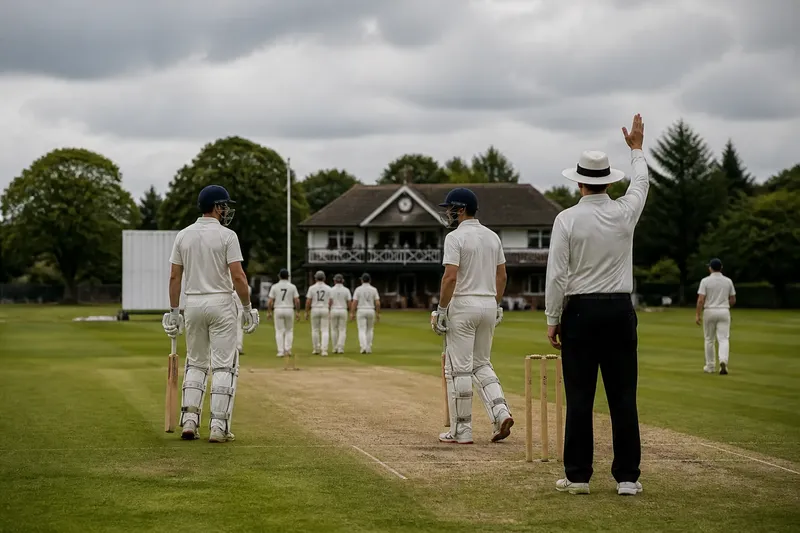
The umpire calls “Over,” and fielders begin to move toward new positions. The batter who faced the last ball does not simply walk to the other end at that moment: the batters’ positions at the close of the over determine who faces next after the change of ends. If you are learning what changes when an over ends, keep the end change, the incoming bowler, and the next striker as separate parts of the sequence.
The innings carries on with its existing score and wickets. A brief pause may make the next delivery feel like a reset, but it is only a change in ends and bowling turn. The useful question is not just who scored on the last ball, but where the batters legally ended up when that delivery was completed.
Over basics
An over is a set of legal deliveries bowled from one end of the pitch. In the usual format, it contains six legal balls. A wide or no-ball does not count among those six, so another delivery is required to complete the over. The batting side receives the applicable extra under the match’s playing conditions.
The bowler delivers the over from one end. A different bowler takes the next over from the opposite end; a bowler does not bowl consecutive overs in the normal sequence. That bowler may return later, subject to the format’s limits.
Think of the pitch as a two-sided workbench: when one person finishes at one side, the next takes the other. Cricket adds a moving part, though—the batters can change ends while running, and special events can affect where they are placed.
End changes
At the close of an over, the batters change ends. The batter at the striker’s end moves to the non-striker’s end, and the non-striker moves to the striker’s end. The incoming bowler delivers from the end opposite the one used for the completed over.
This exchange is part of the normal sequence. It is not a reward for scoring, nor does it mean a batter has been dismissed. The fielding side also has a chance to settle its positions for the next bowler.
To follow the direction, note which end the completed over came from. The next over comes from the other end. To identify the striker, however, first establish where each batter was at the close of the final delivery, then account for the over-end exchange.
Next striker
The striker is the batter who receives the next ball. The over-end exchange changes the batters’ ends, but it does not by itself determine which person will be on strike; that depends on their positions when the final delivery is resolved.
On a dot ball—one with no run—the batters ordinarily remain at their ends. After the over-end exchange, the previous non-striker is at the striker’s end and faces the next over.
For completed runs, do not use a simple odd-or-even shortcut without checking the circumstances. The batters’ ends can depend on whether they crossed before a dismissal, whether runs were completed, and the applicable Laws and playing conditions. A boundary or overthrow may also complicate the sequence. The official scorecard or broadcast graphic can help identify the striker, but it may not explain a disputed ruling; for that, consult the relevant playing conditions or umpire’s decision.
Bowler changes
The next over comes from the opposite end and is bowled by someone other than the bowler who just finished. The captain may select a bowler based on the player’s style, the pitch, the batters at the crease, or the match situation. The over ending does not require a particular kind of bowler.
In limited-overs cricket, a bowler’s share of the innings is restricted by the competition’s rules. Multi-day cricket uses different limits and conditions. The format and playing conditions decide the details, so an unusual match situation is best checked against that competition’s rules.
A right-arm or left-arm bowler, a fast bowler, or a spinner can take the next over. Those descriptions refer to delivery style; the umpire’s call and the count of legal balls indicate whether an over has finished.
Pauses and exceptions
Not every break in play marks the end of an over. A batter may request equipment, a fielder may need attention, or an umpire may speak with a player. If the over is unfinished, the same bowler may resume from the same end.
A wicket can fall during an over. The dismissed batter leaves and another batter comes in; if legal deliveries remain and the innings continues, the over carries on. A no-ball or wide also requires another delivery for the over count, even though runs or other events may occur on it.
For any unusual dismissal or interruption, the official signal and score are useful starting points, not substitutes for the applicable Laws or local playing conditions. Those rules determine how the batters are placed and whether the over is complete.
Over-end questions?
Why do batters change ends after an over?
The change accompanies the bowler’s move to the opposite end. It puts one batter at the striker’s end for the next delivery, depending on where the pair finished the preceding ball.
Does a new over mean a new bowler?
In the normal sequence, yes: the bowler who completed the over cannot deliver the next one consecutively. Another bowler comes from the opposite end, within the format’s limits.
Does a wide count as one of six balls?
No. A wide does not count as a legal delivery in the over, so another ball is bowled. The batting side also receives the applicable extra under the playing conditions.
Can the same bowler return later?
Yes. A bowler may return after another bowler has completed an over, if the format and innings allow it. The usual restriction is against bowling consecutive overs, alongside any format-specific limits.
Worked sequence
Say you are watching an invented club match. Maya is on strike and Lee is the non-striker before the final legal ball of the over. They complete one run, and no dismissal or other unusual event occurs. After the run, Lee is at the striker’s end and Maya is at the non-striker’s end. At the over’s close, they exchange ends, so Maya is at the striker’s end for the next over. A different bowler then delivers from the opposite end. The result is Maya on strike—not because she faced the last ball, but because the completed run changed their ends before the over-end exchange changed them back.
Now imagine the same invented starting positions, but the last ball is a dot and neither batter runs. Maya remains at the striker’s end until the over closes; the exchange puts Lee on strike for the next over. These sequences apply to ordinary cases. If a dismissal or unusual crossing situation occurs, the relevant ruling takes precedence over the shortcut.
Useful viewing cues
- Umpire calls “Over” and the legal-ball count is complete: treat the over as finished and expect the next bowler from the opposite end; if the count or call is unclear, check the score graphic before assuming play has switched.
- A wide or no-ball is signaled: expect another delivery because it does not count as a legal ball; if the signal or count is unclear, wait for the official over count rather than treating the delivery as the last one.
- The same bowler appears ready after a brief stoppage: if the over is unfinished, expect that bowler to resume from the same end; if the over was called complete, expect a different bowler from the other end.
- A wicket falls before the over is complete: expect a new batter and further play by the current bowler if legal balls remain; if the innings has ended, follow the officials’ signals for what comes next.
- Batters completed a run on the final delivery: establish their final positions before applying the over-end exchange; if a dismissal or unusual crossing is involved, defer to the applicable ruling rather than relying on odd-or-even arithmetic.
- The next striker is hard to identify: use the scorecard or broadcast graphic to confirm who is listed on strike; if the event is disputed or the graphic conflicts with play, consult the official score and match ruling.
For a quick reading of what changes when an over ends, follow this order: confirm the over is complete, establish where the batters finished the final delivery, apply the end change, then identify the incoming bowler from the opposite end. The score remains part of the same innings, while the first ball of the new over shows who has the strike and how the next passage begins.