The Myth of the Perfect Bat
The perfect cricket bat depends on weight, balance and handle feel. Learn how to identify a bat that suits your swing, stance and playing conditions.
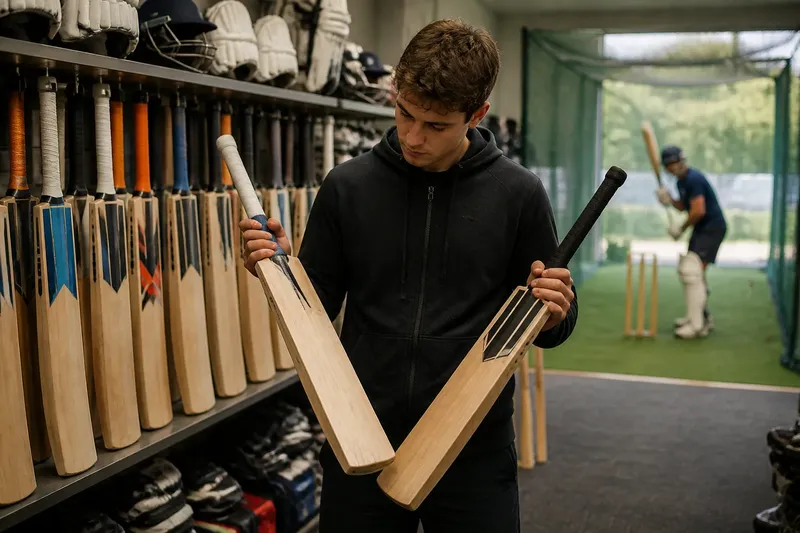
At a shop, one bat feels lively in the hands, while another seems to pull the wrists down before you have even lifted it toward an imaginary ball. That difference is the point: choosing a cricket bat is not a search for one perfect model, but a matter of matching weight, balance and handle feel to the way you play.
A bat that works for a tall, powerful hitter may feel cumbersome to a younger player who relies on quick adjustments. Nor does a lighter bat automatically suit everyone. Each choice trades one quality for another, and the useful question is not which bat wins in the abstract, but which compromise lets you play your shots with control.
When the bat feels heavy
A bat can feel difficult to lift even if its listed weight seems reasonable. The cause may be the bat’s balance: how its mass is distributed along its length. If more mass sits toward the blade’s lower end, the bat can feel as though it wants to swing in a broad arc. That can help some players drive through the ball, but it may make a late defensive movement harder.
Try holding the bat in your usual stance and moving it through the early part of your backswing. If your hands tire quickly, or you struggle to bring the blade down promptly, the combination of total weight and balance may be more than you can comfortably manage. Consider a lighter bat or one that feels less bottom-heavy. Compare a few options using the same grip and stance; a different handle covering can also alter the sensation in your hands.
There is a trade-off. A lighter bat may be easier to maneuver, but it can feel less substantial through contact, especially if you are accustomed to a heavier blade. The aim is not to chase the lightest option. It is to find a weight you can control throughout an innings, including when your timing is imperfect.
When the swing feels slow
A slow-feeling swing is not always a sign that the bat itself is too heavy. A player may grip too tightly, stand in a way that restricts the hands, or try to lift the bat through a large, effortful movement. Before changing equipment, take a few relaxed practice swings with your normal grip. Notice whether the bat moves freely from the stance or seems to catch at the start.
If the movement still feels laborious, compare bats of similar overall weight with different balances. One may feel easier to bring through because more of its mass sits nearer the handle. Think of a cricket bat like a broom: the same object can feel easier or harder to swing depending on where you hold it. This is a simple way to understand leverage, not a rule that a particular balance suits every player.
Say you are a club batter who often arrives late to a short ball. Imagine your current bat feels heavy at the toe, and your relaxed practice swing confirms that it is slow to bring across. Trying a less bottom-heavy bat of comparable weight may make the initial movement feel more manageable; if it then feels too insubstantial through a drive, you have learned that you need a different compromise rather than simply the lightest blade.
When contact feels awkward
Sometimes the swing seems comfortable, but the bat still feels awkward at the moment of contact. The handle may be part of the problem. Its shape, thickness and grip can affect how securely the fingers sit and how freely the wrists move. A handle that feels too thick may encourage a player to squeeze; one that feels too thin may prompt the same response because the bat seems insecure.
Hold the bat as you would at the crease, with the hands close together in your normal position. Check whether the fingers wrap comfortably and whether you can soften your grip without losing control. If a new grip changes the fit, assess that combination rather than judging the bare handle alone. Grip materials and extra layers can alter both thickness and feel.
Handle feel is personal, but it should not be confused with a technical fix for every batting issue. A stiff or uncomfortable movement may come from technique, soreness or unfamiliarity, not only equipment. If discomfort persists, stop using the setup that aggravates it and seek suitable coaching or medical advice where needed.
When the blade feels unwieldy
A bat can feel unwieldy because its length, blade profile or overall shape does not suit the player’s stance and reach. Players often focus on weight and overlook how the bat sits beside the pads or how easily the toe clears the ground. If the blade feels awkward before the swing begins, check the fit and stance rather than trying to correct the sensation by gripping harder.
Bat sizes and shapes vary, and a label alone cannot tell you how a particular bat will move in your hands. Try it in the position you use at the crease, then lift and lower it without forcing the motion. A bat that feels comfortable in a shop display may feel different when you adopt your actual stance, so use a realistic posture when comparing choices.
Pay attention to where the bat’s mass seems to sit, too. A pronounced lower profile may create a different swing sensation from a blade with more material higher up, even when the bats have a similar listed weight. Neither profile is universally superior. The right question is whether the shape and balance let you move the blade along the path your shots require.
How do you compare bats?
Should you choose the lightest bat?
Not automatically. A lighter bat can be easier to move, but it may feel less settled through contact or unfamiliar in a player’s hands.
Does a heavier bat hit harder?
Weight alone does not determine how well a player strikes the ball. Timing, control and the ability to move the bat freely all affect the quality of contact.
What does pickup mean?
Pickup is the way a bat feels when you lift and swing it, which reflects both its weight and how that weight is distributed. Two bats with similar listed weights can have noticeably different pickup.
Should you copy a professional’s bat choice?
A professional’s preferred bat reflects that player’s body, technique and habits. Use it as a point of comparison, not as a prescription for your own equipment.
A sensible comparison order
When several bats are available, compare them in a consistent order so that one appealing detail does not dominate the decision. Use your normal grip, stance and intended shot movement. If possible, ask a coach or knowledgeable shop worker to help you compare, while keeping your own comfort as the main evidence.
- Check the fit. Hold the bat beside your stance and see whether its length and shape feel manageable.
- Assess total weight. Lift it repeatedly at an easy pace and notice whether your hands or forearms tense.
- Notice the balance. Compare how readily the bat rises and changes direction, not just how it feels resting in your hands.
- Test the handle. With the grip you expect to use, check whether your fingers sit securely without squeezing.
- Repeat your usual movement. Make controlled practice swings and see whether you can move from backswing to follow-through without forcing the bat.
- Compare the trade-offs. Decide which matters more for your game: easier movement, a more substantial feel, or a particular balance.
Labels, manufacturer guidance and competition rules may matter when choosing a bat’s size, materials or condition, so check the relevant guidance for your level of play. For an ordinary equipment comparison, however, the most useful evidence is the way the bat feels through your own familiar movements.
Choose for your own swing
Players who face different bowling and favor different shots may reasonably choose different bats. A batter who values quick hands may prefer a different pickup from one who likes a heavier feel through a front-foot drive. Even the same player’s preferences can change with strength, technique or the demands of a particular format.
The myth of the perfect bat persists because a single “best” choice sounds simpler than a set of personal trade-offs. But weight, balance and handle feel work together, and no one feature settles the question. When the bat lets you prepare, adjust and swing without fighting it, you have a sounder basis for choosing than any universal ranking can offer.