A Slip Cord or a Deep Fielder?
A slip cord or a deep fielder covers different risks: learn how the ball, batter and bowler help you read each placement during a match.
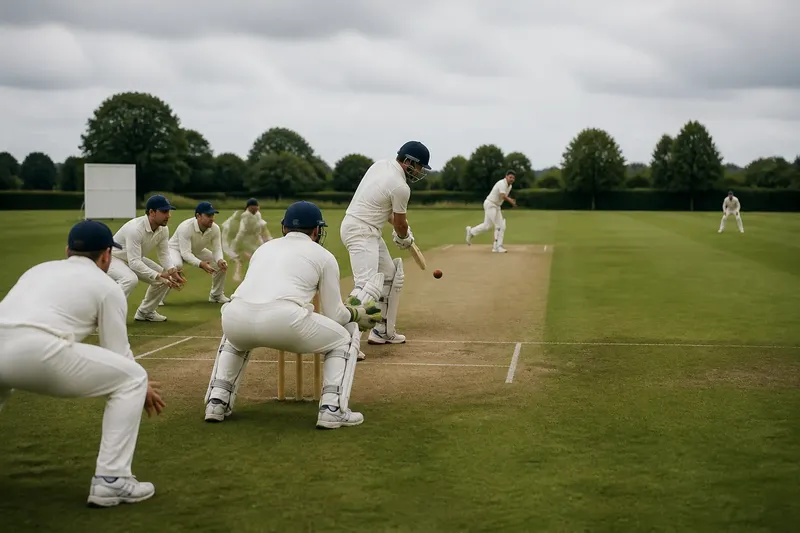
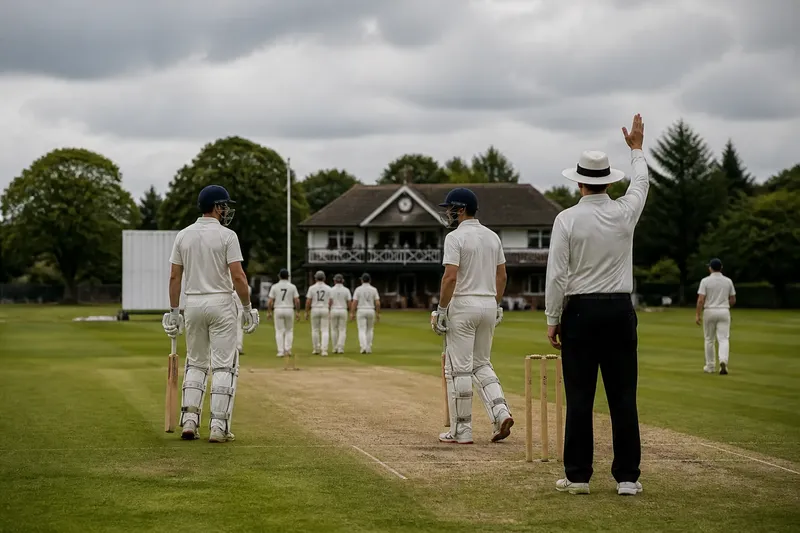
A ball edges past the bat and skims toward the wicketkeeper, while a teammate waits near the rope on the other side of the ground. Those fielders are not interchangeable: a slip cord targets a chance created by a fine edge, while a deep fielder protects a larger area from a forceful hit. To decide what each position is doing, start with the likely path of the ball, then read the batter, bowler and field.
Start with the ball’s route
In cricket, a slip is a close catching position beside and slightly behind the wicketkeeper. Several slips arranged in a line make a slip cord. They stand where an edged ball may travel after brushing the bat, usually at a height and speed a fielder can attempt to catch.
A deep fielder stands nearer the boundary, often in the direction of a likely powerful stroke. The position can stop the ball reaching the rope, catch a lofted shot, or return the ball quickly to the wicket. The exact name depends on the angle: deep square leg, long-off and deep cover describe different sectors of the field.
The basic distinction is the kind of danger being covered. Slips respond to a narrow, sudden deflection near the batter. A deep fielder guards against a shot traveling farther through a wider arc. One is a net for a fine edge; the other is like placing a bucket where spilled water is most likely to run.
Read the delivery
Look first at what the bowler is trying to make the ball do. A fast bowler may use pace and movement away from the bat to invite an edge. If the wicketkeeper and slips are ready, the field is set to catch that edge rather than merely stop a shot along the ground.
A spinner may also draw an edge, but the likely height, pace and direction can differ. The ball might turn past the outside edge toward slip, or take an inside edge toward a close fielder on the leg side. Watch the bowler’s line and the ball’s movement, not just the number of players near the wicket.
Now consider the batter’s response. A batter defending with a straight bat may be trying to keep the ball close, while a batter swinging across the line may send it toward the leg-side boundary. Neither cue settles the field on its own: the bowler’s plan, the batter’s options and the match situation work together.
Check the match situation
Field placements reflect what the bowling side wants to prevent or create. With a new batter at the crease, a captain may position slips to exploit uncertainty or movement. If the batter is repeatedly driving through a particular region, a deep fielder may be placed there to stop a boundary or catch a mis-hit.
The format and stage of the innings matter, too. In a longer innings, a captain might accept some risk of runs to keep catching positions in place. In a limited-overs match, boundary protection can become more valuable when the batter is looking to attack. These are tactical choices, not fixed rules; the captain can move a fielder as the plan changes.
Also notice how many players are available outside the inner fielding restriction in the format being played. That can affect whether the captain can keep a deep boundary option and still maintain close catchers. If the field looks unusual, the number and location of fielders may reflect the rules as much as the bowler’s preference.
Trace the open space
Before the next ball, scan from the batter toward the boundary. Where is the gap? A slip cord leaves much of the outfield open, but that may be an acceptable trade if the delivery is expected to produce a catch behind the bat. A deep fielder reduces the danger in one boundary sector while leaving other directions less protected.
Then compare the fielder’s position with the shot the batter is most likely to play. A deep point can cover a cut or an upper cut toward the off side; deep midwicket can cover a strong leg-side hit. These labels tell you where the fielder is stationed, not exactly where every ball will go.
Imagine a right-handed batter facing a fast bowler who is moving the ball away from the bat. The captain keeps a pair of slips behind the wicketkeeper and leaves the deep cover region open. If the batter edges a drive, the slips have a catching chance; if the batter beats the infield with a clean drive, the ball may reach the boundary. The placement makes sense because the captain is choosing to pursue the edge rather than cover every possible outcome.
What should you watch next?
Why are there several slips?
A cord spreads catchers across likely edge angles, since the ball can travel at different heights and directions. The captain may add or remove a slip as the bowler changes line, movement or pace.
Why is a fielder so far back?
The captain may expect the batter to hit hard into that sector or want a fielder positioned to stop a boundary. A deep fielder can also provide a safer catching position for a lofted shot, though a catch depends on the ball’s flight and the fielder’s judgment.
Can a deep fielder catch an edge?
Yes, if an edge travels high or far enough, a fielder in the deep may have a chance. But the position is usually chosen to cover a distant shot, whereas slips are placed for edges that remain close to the wicket.
Does a slip always mean an attacking field?
It signals interest in catching edges, but the rest of the field matters. A team can keep slips while also placing boundary fielders, balancing the chance of a wicket against the risk of conceding runs.
Follow the change
Watch what happens after a batter plays and where the captain moves the field. If an edge falls short or flies between catchers, the slip cord may shift wider or narrower. If the batter repeatedly clears the infield in one direction, a deep fielder may be moved into that sector.
For a clear read, ask yourself three things before each delivery: what is the bowler inviting, what shot is the batter likely to choose, and which area has the captain left exposed? A slip cord or a deep fielder then becomes more than a name on the field map: it tells you which risk the team is prepared to take, and which one it is trying to cover.