Keeping Score at a First Cricket Match
Keeping score at a first cricket match is easier when you follow runs, wickets and overs in turn, using the scorecard to keep the story clear.
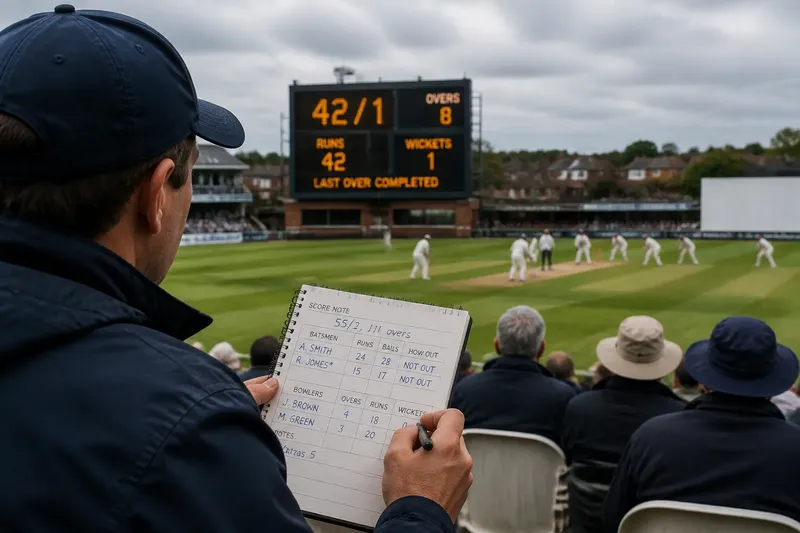
The scoreboard changes while a spectator settles into a seat: the batting side has 42 runs, one wicket down, and the latest over has just ended. Keeping score at a first cricket match does not require recording every delivery. A few regular glances at the scorecard can show whether the batting side is building, losing wickets, or simply working through its innings.
Start with three figures
Look first for the score, wickets, and overs. A display such as 42/1 after 8 overs means the team has scored 42 runs and lost one wicket, with eight overs completed. Some scoreboards write the same information as “42 for 1.” The figures are a quick sketch, not a full account of every event.
Runs are the points the batting side adds. A wicket usually means a batter has been dismissed; the team’s wicket count rises, and a new batter comes in. The overs figure tells you how much of the innings has been bowled. These three pieces fit together like labels on jars: each identifies a different part of the same situation.
Try reading them in that order whenever you look up: total runs, wickets lost, overs completed. Keeping the order steady makes the display easier to interpret, even when the crowd reacts to something you missed.
Read the scorecard
A printed or digital scorecard provides more detail than the ground display. A batting table commonly shows each batter’s runs and how they were dismissed, while a bowling table tracks the bowlers’ overs, runs conceded, and wickets taken. The exact layout varies, but the headings usually tell you what each column means.
For a first match, you can skip most columns. Find the team total and overs, then glance at the batters who are currently at the crease. Their individual scores explain who has contributed to the total; they do not tell the whole story on their own. A batter can face many deliveries without scoring, or add runs quickly in a short spell.
The word “extras” covers runs credited to the team rather than to a batter. For instance, a wide or a no-ball can add to the total without being counted as a batter’s run. You need not identify every kind of extra at once. Just remember that the team total may be higher than the sum of the batters’ scores.
Watch the score move
Compare the current display with the last time you checked. If the runs rise while the wickets stay still, the batters have added runs without a dismissal. If a wicket falls, note both the change in the wicket count and the new batter taking the field. That small pause often makes a shift in the innings easier to follow.
Say you look up to see 42/1 after 8 overs, then check again a little later and see 55/2 after 11. The side has added 13 runs, lost another wicket, and used three more overs. That tells you more than either display alone: the score has moved, but the team has also had to replace a batter.
There is no need to judge whether that change is good or bad without knowing the match situation. In a limited-overs match, the target and remaining overs matter; in a longer format, the innings may have a different shape. For now, treat the figures as a record of what has happened, then listen for how the crowd and players respond.
Keep a light record
If you want a personal note, write down only the display at a few natural pauses: after an over, a wicket, or a break in play. A phone note or a small paper card is enough. Record the total, wickets, and overs in one line, such as “55/2, 11 overs.” You can add a batter’s name if you want to remember who was in.
Keep the note brief. Trying to write down every run, boundary, and change of bowler can pull your attention away from the match itself. The scorecard is there to help you reconnect when you look back, not to turn a relaxed afternoon into a bookkeeping task.
Questions from the stands?
What does 42/1 mean in cricket?
It means the batting team has scored 42 runs and lost one wicket. The number after the slash is the wickets lost, not the number of overs.
What does an over tell me?
An over is a set of legal deliveries bowled by one bowler before another takes over from the other end. The overs count gives you a broad sense of how far the innings has progressed, without showing every delivery.
Why does the total not match the batters’ runs?
Some runs are extras, credited to the team rather than to an individual batter. A scorecard may list those separately, so the team total can exceed the batters’ combined scores.
Do I need to follow every ball?
No. Checking the total, wickets, and overs at intervals is enough to keep track of the innings’ broad direction. If a particular delivery matters to you, the scorecard can help explain its effect afterward.
Let the match breathe
Keeping score at a first cricket match works best as a light habit: check the three main figures, notice what changed, and return your eyes to the field. The scorecard can anchor your attention without competing with the sounds and pauses that make the match feel alive. If you lose the thread, wait for the next clear update and start again from the total, wickets, and overs.